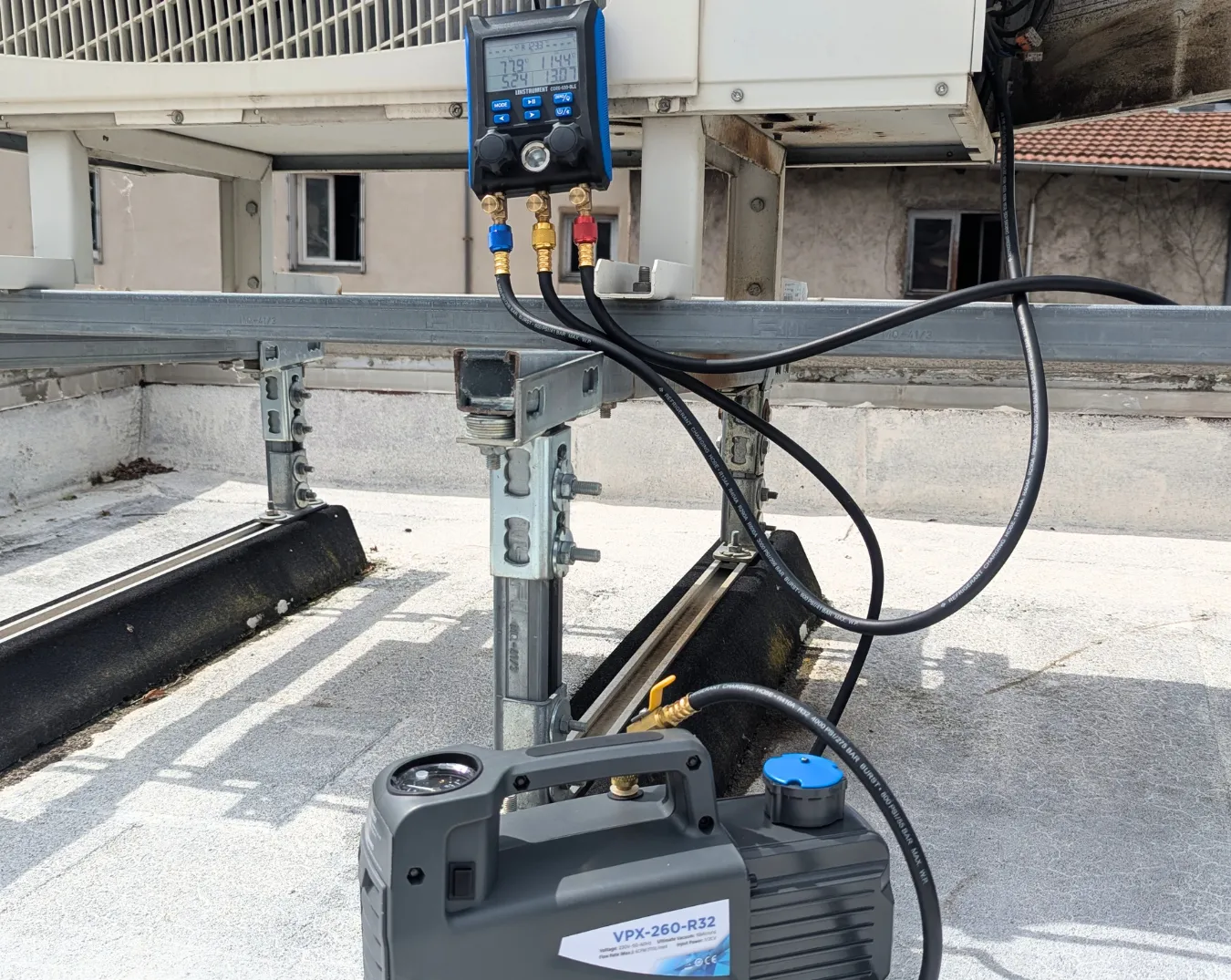
Vacuum pumping is a critical step in HVAC engineering. Too often overlooked or poorly performed, it is nevertheless decisive for the reliability, performance, and service life of a refrigeration or air conditioning system.
An effective vacuum process removes air, moisture, and non-condensable gases, thereby preventing corrosion, acid formation, and premature failures.
Here is a simple and professional method to successfully perform vacuum pumping, along with the most common mistakes to avoid.
Prerequisites Before Vacuum Pumping
Before any intervention, the system must be perfectly leak-tight. A nitrogen pressure test is essential to confirm the absence of leaks. To secure this step, a foaming leak detection spray can be used to identify leaks at the fittings. Hydrogen-nitrogen (forming gas) can also be used and detected with an electronic leak detector such as the LT-300-PRO2 to further refine leak detection.
The quality of fittings is also essential. Proper tightening, carried out using a digital torque wrench, helps prevent leaks and ensures the mechanical integrity of the connections.
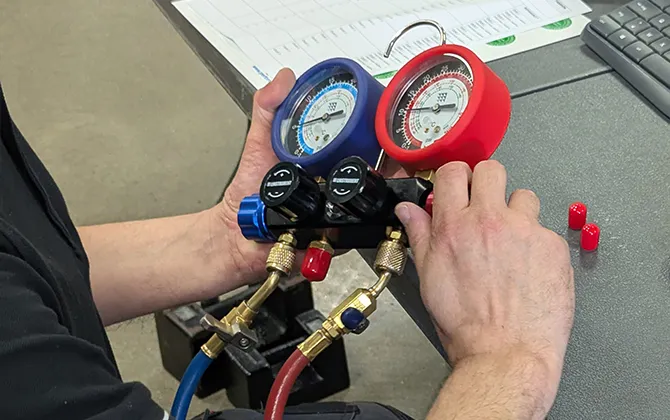
Hose gaskets can deteriorate after repeated use. It is therefore important to ensure their proper sealing. Using “Zero Emission” hoses such as VZE-755 can facilitate handling (even though their use is even more valuable in maintenance operations).
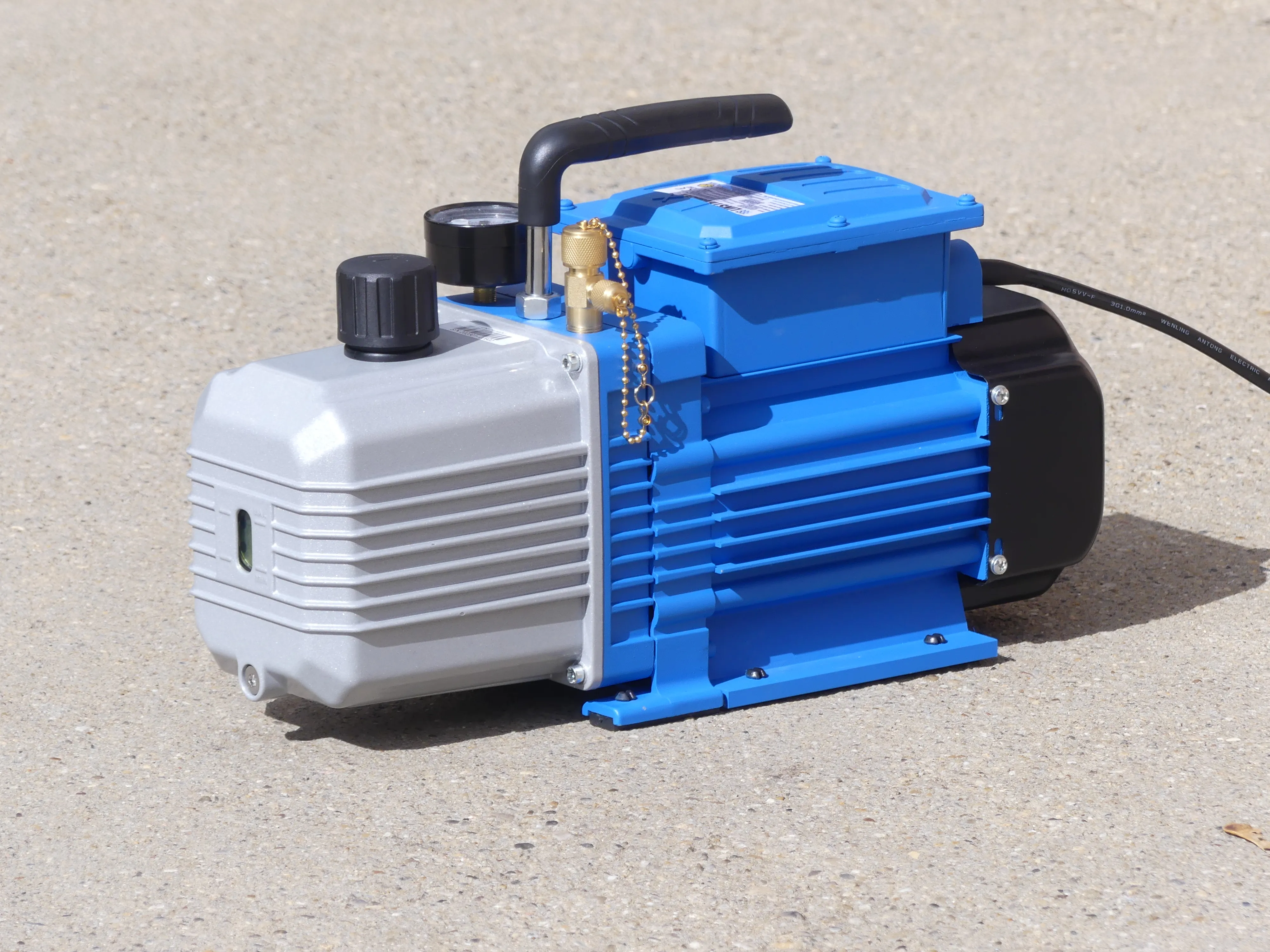
In addition, the vacuum pump must be properly sized for the system. For standard interventions, a high-performance two-stage pump such as theVPX-240-R32 or VPX-260-R32 allows a deep vacuum to be reached quickly. For larger systems, a high-flow pump such as the VPX-300-R32 significantly reduces evacuation time. For propane (R290) systems or hazardous environments, the use of an ATEX-certified pump such as the HVP-260-EX is recommended by French refrigeration associations to ensure safe operation.
Finally, to guarantee reliable measurement, the use of an electronic vacuum gauge such as the VGW-760 is strongly recommended.